Psychotherapy for Couples and Individuals
Sometimes the love is there, but it doesn't feel like enough. The same arguments return, distance grows, and it becomes harder to feel like yourself. Whether you come on your own or as a couple, therapy offers a steady space to understand what's happening, and to begin to change it.
Book a Session
Does this sound familiar?
Building a better relationship starts with recognition.
The same patterns
The same argument keeps coming back, and it leaves you both on edge. You can see the pattern, but neither of you is sure how to change it.
Neurodiversity in relationships
When one or both of you is neurodivergent, you may process information, emotion and sensory input differently. Without a shared understanding, this can leave you feeling unheard or misunderstood.
Changes in intimacy
Sex may feel less connected than it once did, or desire may have faded. It can be difficult to know how to raise this with each other.
Growing apart
Life has changed, and so have you both. You'd like to feel closer again without losing a sense of who you are.
Understanding what's happening is often the first step.
The Process
First
In our early sessions, we take time to understand what has brought you to therapy. We pay attention to what you think and feel, and to what your body may have been holding.
Then
Drawing on attachment theory, Internal Family Systems (IFS), and systemic and psychodynamic approaches, we look at the patterns that keep repeating and what may be driving them.
Over Time
With greater understanding, we work on changing how you relate to yourself and to others, at a pace that feels manageable for you.
How This Works
Ongoing Sessions
Weekly or fortnightly sessions, online or in person. Over time, we work together to understand the patterns between you and to find new ways of relating to each other.
Online · In Person, Bray, Co. Wicklow
Extended Sessions
Extended, focused sessions for couples at a turning point. An intensive gives us time to explore what is happening in your relationship in depth, without the gaps between weekly sessions. Pricing reflects the length and format of the work and is available on request.
In Person, Bray, Co. Wicklow
One-to-One Sessions
Regular sessions, online or in person, with a relational and integrative lens. We work to understand what is happening for you, drawing on attachment-based, trauma-informed, IFS and somatic approaches.
Online · In Person, Bray, Co. Wicklow
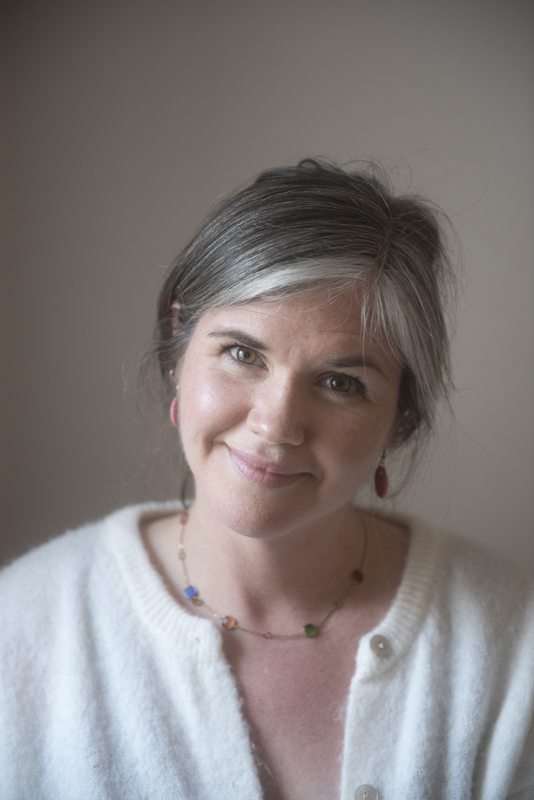
Relational Psychotherapist · MIACP
My work as a psychotherapist rests on a simple idea: we are shaped in relationship, and it is in relationship that healing happens. That includes our relationships with others, the relationship we build together in therapy, and the relationship you have with yourself.
Over the years, I've found that much of what brings people to therapy has a relational root. The feeling of love present in a relationship, but it doesn't feel enough. Behaviours and patterns that seemingly feel impossible to break. Or you've experienced the difficulty of staying true to yourself, while remaining in relationships.
In my work, I draw on systemic and psychodynamic approaches, Internal Family Systems (IFS), attachment theory, neurobiology, and somatic, trauma-informed practice. I continue to train and study, and that learning informs how I work with each person. I am currently completing a Postgraduate Diploma in Neurodiversity at University College Dublin.
I am compassion-focused, and use techniques that focus on building understanding and breaking patterns of shame-based feelings about how things may be going for you. Challenging times require support, insight and action; they certainly do not mean you are broken.
I work with individuals and couples in Bray, Co. Wicklow and online, and my practice is neurodivergent-affirming and LGBTQIA+ inclusive.
If you'd like to find out whether working together might suit you, you're welcome to get in touch.

Before you reach out
The things people want to know before they make contact.
Relational psychotherapy is an evidence-based approach that sees human connection as central to psychological wellbeing. It recognises that we are shaped by our relationships, and that many difficulties arise when supportive connection is hard to find or keep, or when past relational hurts affect how we connect in the present.
In relational psychotherapy, the relationship itself is the primary site of the work: between you and me, between you and your partner, and between the different parts of yourself. We work with what you think, what you feel, and what your body already knows.
The approach continues to develop, drawing on attachment research, neuroscience and multicultural psychology. Research also suggests that the therapeutic relationship itself matters: people who experience a deeper sense of connection with their therapist over the course of therapy tend to report greater wellbeing.
Neuroaffirming therapy is an approach that affirms and validates the experiences of neurodivergent people, including those with ADHD, autism, dyslexia, dyspraxia, Tourette's syndrome and other neurological variations. Rather than framing these differences as deficits or disorders to be fixed, it recognises them as natural variations in human diversity.
In practice, this means neurodivergence isn't something we work around. I work with an understanding that your neurotype shapes how you communicate, how you experience intimacy, how you process conflict, and how you show up in relationship.
Being attuned to your relational, emotional and sensory needs isn't an add-on to the work. It's at the centre of it. Whether you're diagnosed, self-identified, or just beginning to understand your own neurology, you are welcome here, and the work will meet you where you are.
Yes. What you share in our sessions is confidential. As an accredited member of the IACP, I am bound by its Code of Ethics and Practice, and I take the privacy of our work seriously.
There are a small number of exceptions where confidentiality may need to be set aside: if there is a serious risk of harm to you or to someone else, where there are concerns about the safety of a child, or where disclosure is required by law. If this ever arises, I will, wherever possible, discuss it with you first.
I attend regular clinical supervision, as required by the IACP. This is an extension of the care I offer to the people I work with, and when I bring work to supervision, I do so without identifying details.
Before we begin working together, I go through all of this in our therapy contract, so you know exactly how confidentiality works and feel comfortable and safe to proceed.
I do not work with couples where there is abuse present and safety is at risk. Some behaviours present in therapy as explosive: shouting, yelling, cursing, name calling, slamming doors. These are behaviours I can work with if both partners are open to change. When there is fear in a relationship and you are experiencing violence and controlling behaviours, it is contraindicated to work with you both as a couple, as it puts your safety at risk further. If this is your situation, please reach out individually and I will help you find the right support.
Finding the right therapist matters, and it's natural to want a sense of someone before you begin. I offer a free 15-minute consultation call online, where you can ask any questions you have and get a feel for how I work.
It also gives me a chance to understand a little about what's bringing you to therapy, so we can both consider whether working together is the right next step. It needs to feel right for both of us, and there's no obligation to continue after the call.
Ready?
A first conversation is just that: a conversation. No commitment. Just a chance to see if this feels right.
Book a consult callhello@kateshannontherapy.ie · Online & In Person, Wicklow