Neurodivergent Relationships
Suspending judgement, not accountability
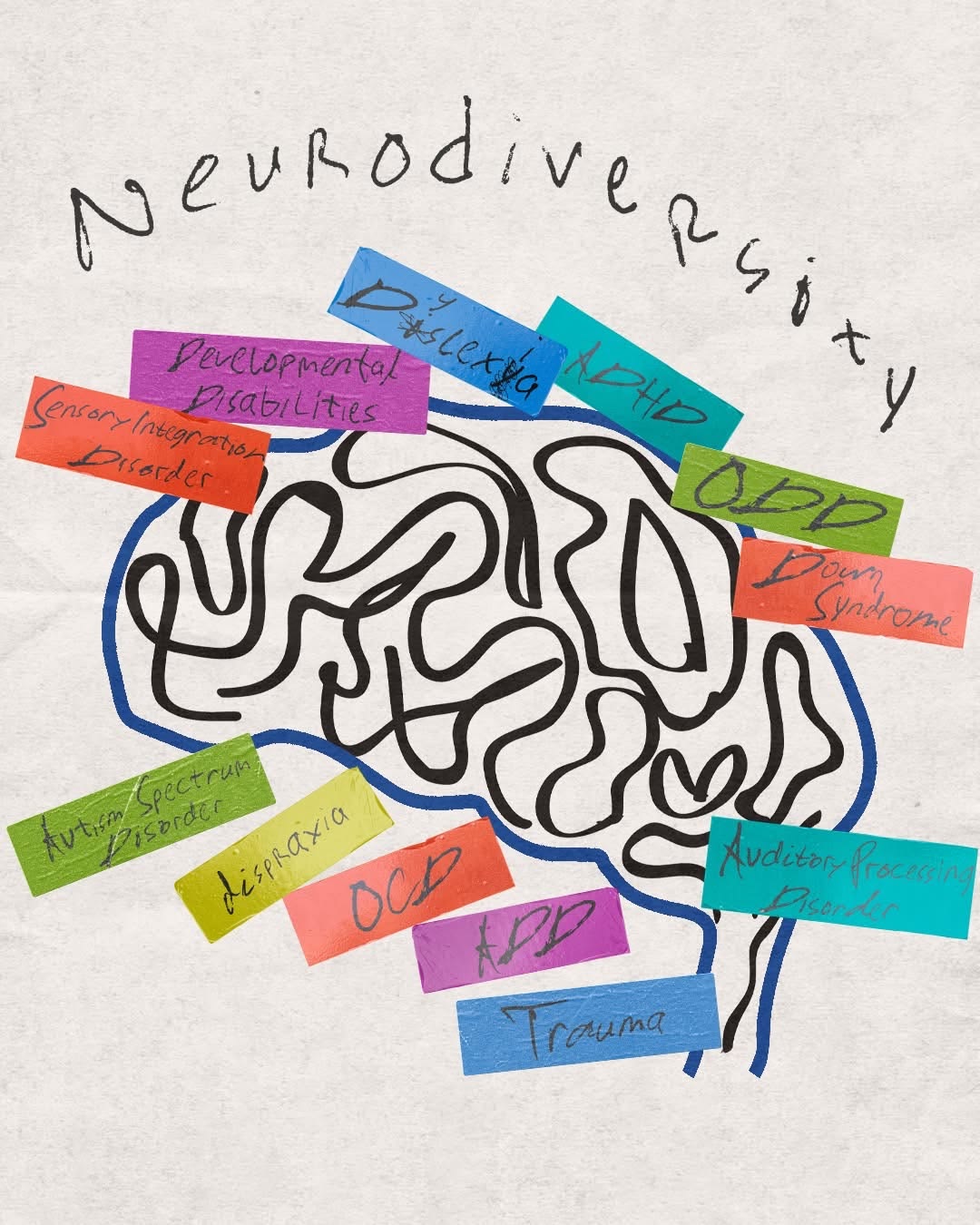
When relational needs are harder to locate on a neurodivergent spectrum, the relationship can become a minefield. Triggers, dysregulation, internal fires that quietly drain the capacity two people have for each other. This is a conversation I've been having a lot lately: with peers, with clients, with friends who march to the same drum in different circles at different times. And the request underneath all of it is the same: can we suspend moral evaluation of dysregulation long enough to actually understand it?
Neurodivergent couples and individuals want to understand their own patterns without pathologising them and without oversimplifying them. They long to be understood and considered. And yet it's a language many people aren't fluent in yet. It's a work of translation: inside the couple, inside the throuple, inside the wider relational field, inside families of origin, inside the friendships that matter.
Some people self-identify as neurodivergent; others hold a formal diagnosis. Opinions differ on how much that distinction matters. To me, it doesn't matter much at all. If you experience life through a different set of challenges and nuances, if you feel like you're operating inside a system that's oppressing your own internal ecosystem, you may well find authenticity and self-acceptance somewhere inside the neurodivergent paradigm, whether or not a clinician ever confirms it for you.
Understanding this paradigm from a place of embodiment means asking ourselves, and eventually others, to repeatedly shift and adapt toward more comfortable, more authentic ways of being in the world. That's an old dilemma and a paradoxically current one. I recognise it in myself and in my work. It's driven, when I'm not careful, by a part of me that can whisper: the world still thinks you're too much, and the world still wants you to stay still and be quiet. Knowing that part well has become one of the most useful things I bring into the therapy room. When a client describes feeling too much, too slow, too sensitive, I recognise the shape of it from the inside. I don't need to rush them out of it, because I know that voice isn't the whole of who they are. It's a part that learned, for good reason, to keep them safe.
If you learned through misattunement that your needs weren't safe to express, you may find it difficult to be taken care of, by others and by yourself. You'll wait to be told. You'll find yourself at your limits before you notice you were approaching them. You'll believe relationships are hard work, and that holding emotion in feels easier than releasing it outward. But the easy becomes burdensome. Quiet repression becomes exactly what the culture around us thrives on, favouring the landscape of function over the landscape of capacity.
The lag nobody taught us to read
Interoception is our sense of what's happening inside the body: hunger, tiredness, the first stirrings of an emotion. For many neurodivergent people, that signal seems to arrive late, and we often see this most strongly in those carrying trauma histories. Awareness of needs, of capacity, of wants and desires, gets shaped by that delay. The body reacts long before the mind can map what's actually happening, and language and translation blur inside the overwhelm.
This delay is frequently misread. In relationships, it gets interpreted as avoidance, withdrawal, disengagement. It can look and feel, to the other person, like unwillingness. Internally, it feels like: why can't I feel this yet? Why does my body lag behind?
We've built a culture that treats articulation and verbalisation as the gold standard of health. We teach children the names of feelings long before they can actually inhabit those words, rushing to verbalise instead of letting the feeling rest inside them first. Slowing that rush down is the embodied work of holding difference against a backdrop of differing capacity, and it shows up in every relationship, regardless of its shape, its structure, or what identity it conforms to.
Understanding isn't the same as absolution
Suspending moral evaluation of dysregulation is the right move for understanding what's happening inside a person. But it isn't the same as suspending relational accountability for the impact that dysregulation has on someone else.
A partner's shutdown or flooding can be entirely non-moral in its origin. When there is delayed processing, sensory overwhelm, a genuine difference in operating system, it's hard to discern how to receive it. Ultimately, it will still land on the other partner as something that needs repair. If "we don't pathologise dysregulation" quietly becomes "therefore nothing needs to be repaired," the couple hasn't actually left the collapse-into-pathology trap. They've just moved which side of it collapses. Now the more regulated-presenting partner absorbs the impact in silence, because naming it starts to feel like pathologising their partner's nervous system.
That's its own version of the quiet repression I described earlier. It's just changed address.
Holding differences without collapsing into pathology sounds something like this: your timeline is not a character flaw, and the impact your timeline has on me is not something I have to swallow to prove I understand you. Both things are true at once, and I don't think either one has to cancel the other out.
Many neurodivergent relationships experience lags, because there's so much translation work. Most couples reach for the fast version because it resolves the discomfort quicker. But the fast version is almost always where the pathologising creeps back in, just from a different direction.
The work is learning to wait for each other's timelines without keeping score, and to name impact without turning it into indictment. Neither partner has to get there first. Both of you get to arrive in your own time, and still be accountable for what your arrival costs the other person along the way.
If something here resonates, for you, your relationship, or your own practice, you're welcome to . I offer neuroaffirming individual and couples therapy in Bray, Co. Wicklow and online, and you can book a free 15-minute consultation call whenever feels right.